
VoiceAlarm provides an intuitive user interface with a wealth of online assistance just
a keystroke away.
a keystroke away.
Click Image for a Larger View
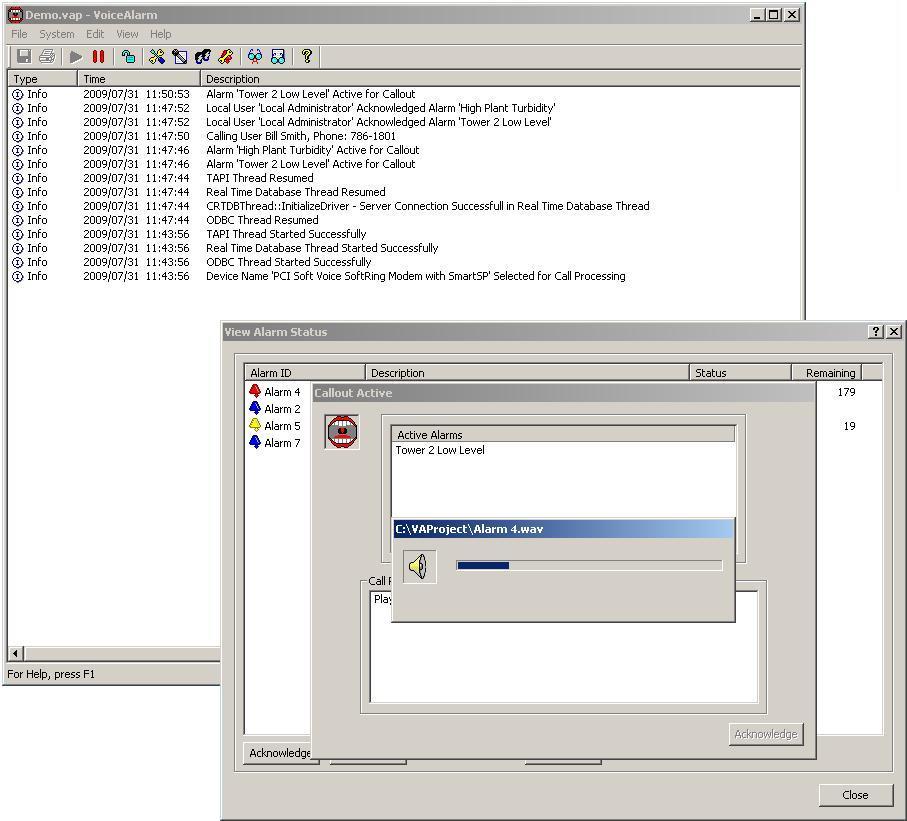
Alarm messages may be configured to play on the PC's speakers notifying local users
that a remote notification is pending. Local users may view the status of alarms and
change the acknowledge and disable states. In the event a local user changes the state
of alarms during an active call, the remote user is notified with playback of a "local
acknowledged" message and the call is ended.
that a remote notification is pending. Local users may view the status of alarms and
change the acknowledge and disable states. In the event a local user changes the state
of alarms during an active call, the remote user is notified with playback of a "local
acknowledged" message and the call is ended.

VoiceAlarm

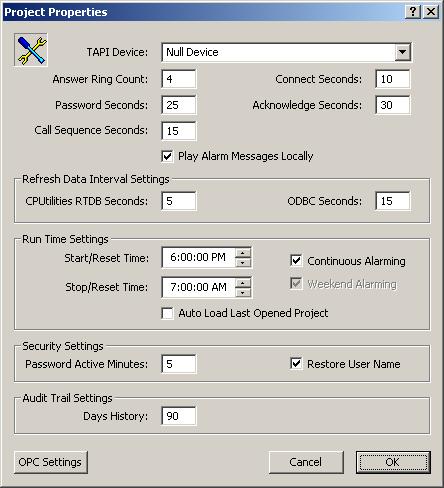
Global system properties are used to define the operational parameters of a project.
These settings allow a high level of customization and impact the overall system
functionality.
These settings allow a high level of customization and impact the overall system
functionality.
Click Image for a Larger View
Click Image for a Larger View
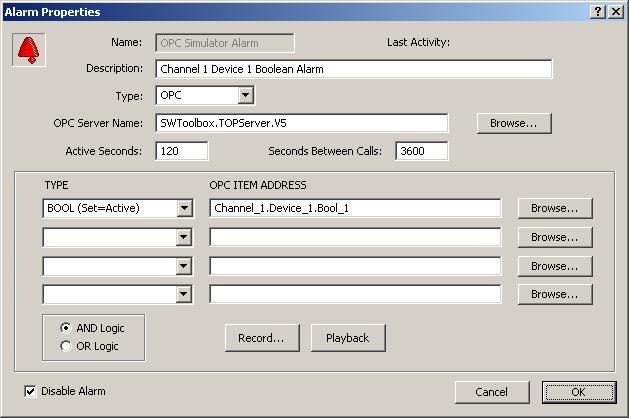
Alarm properties are used to define the settings for each notification event. Up to four
process exceptions may be combined into a single alarm using "AND / OR" logic.
A preset interval dictates how long the process exceptions must be in the active
(pending) state before the notification is initiated. A recall interval is used to continually
notify plant personnel of conditions that have been acknowledged, but have remained in
the active state since the original notification.
process exceptions may be combined into a single alarm using "AND / OR" logic.
A preset interval dictates how long the process exceptions must be in the active
(pending) state before the notification is initiated. A recall interval is used to continually
notify plant personnel of conditions that have been acknowledged, but have remained in
the active state since the original notification.